Diamond Carat
Because Weight Carries Meaning, but Proportion Holds Beauty
Carat is one of the most recognized elements when choosing a diamond but it’s also one of the most misunderstood. At ANANTA, we believe carat weight should be seen not just as a number, but as part of a delicate balance between size, brilliance, and purpose.
This guide will help you understand what carat truly means, how it affects value and appearance, and how to make the most thoughtful choice for your moment.
What Is Carat?
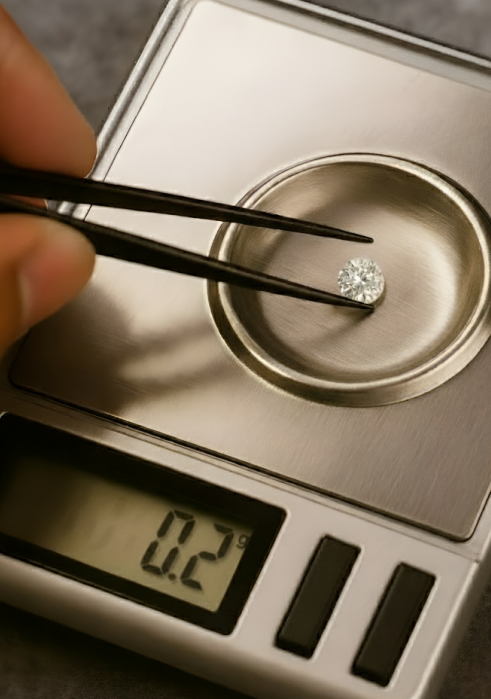
A carat is the standard unit used to measure a diamond’s weight; 1.00 carat equals 0.2 grams, about the weight of a paperclip.
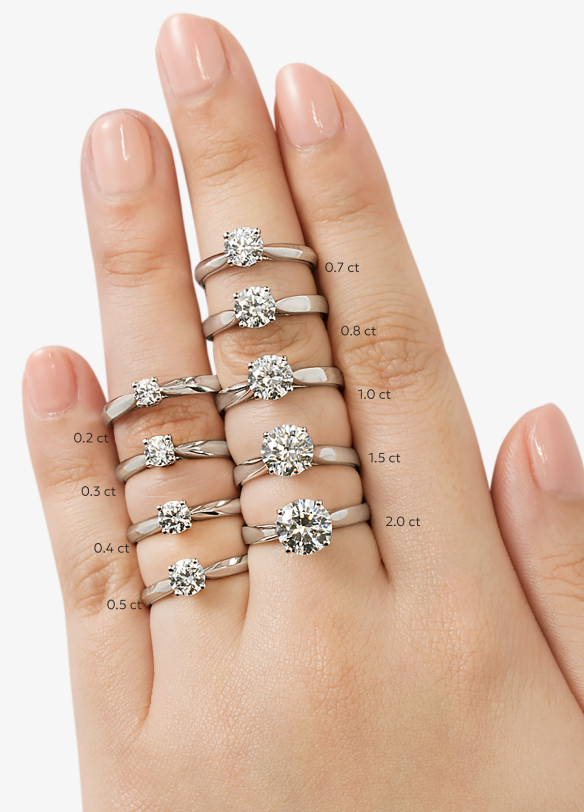
It’s important to know: carat is not the same as size. Two diamonds with the same weight can appear completely different depending on their cut, depth, and shape.
The word “carat” originates from ancient gem traders who used carob seeds as natural, consistent counterweights. In 1913, the modern metric carat (0.2g) was standardized globally.

Carat vs Size
Same Weight, Different Presence
While carat measures weight, the size you see is influenced by a diamond’s:
- Shape: Elongated shapes (oval, pear, emerald) often appear larger than rounds of the same carat.
- Cut: A poorly cut diamond with deep proportions may hide weight in its depth, making it appear smaller.
- Depth & Girdle Thickness: A diamond with too much depth or a thick girdle can trap weight where it isn’t visible.
At ANANTA, we carefully consider how each stone presents itself. Not just on paper, but in real life so your diamond always delivers lasting visual impact.
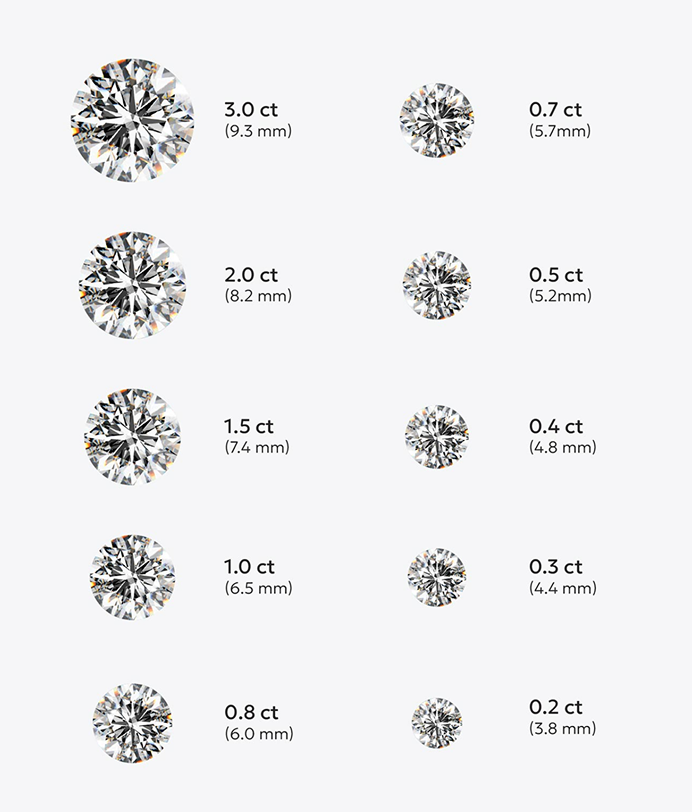
How Carat Affects Price
Carat is one of the most significant factors affecting a diamond’s price. Larger diamonds are rarer, which means the price per carat increases exponentially, not linearly.
For example:
- A 1.00 ct diamond may cost much more than two 0.50 ct diamonds, even if all other quality factors are equal.
- Prices also spike at certain “magic sizes” like 0.50 ct, 0.70 ct, 1.00 ct, and 2.00 ct, where even small jumps across these thresholds can dramatically increase cost.
That’s why it’s important to consider value alongside aesthetics ; and why Ananta recommends premium sizes as a smarter, more balanced choice.
Premium Size Diamonds by ANANTA
The Same Beauty, with Greater Value
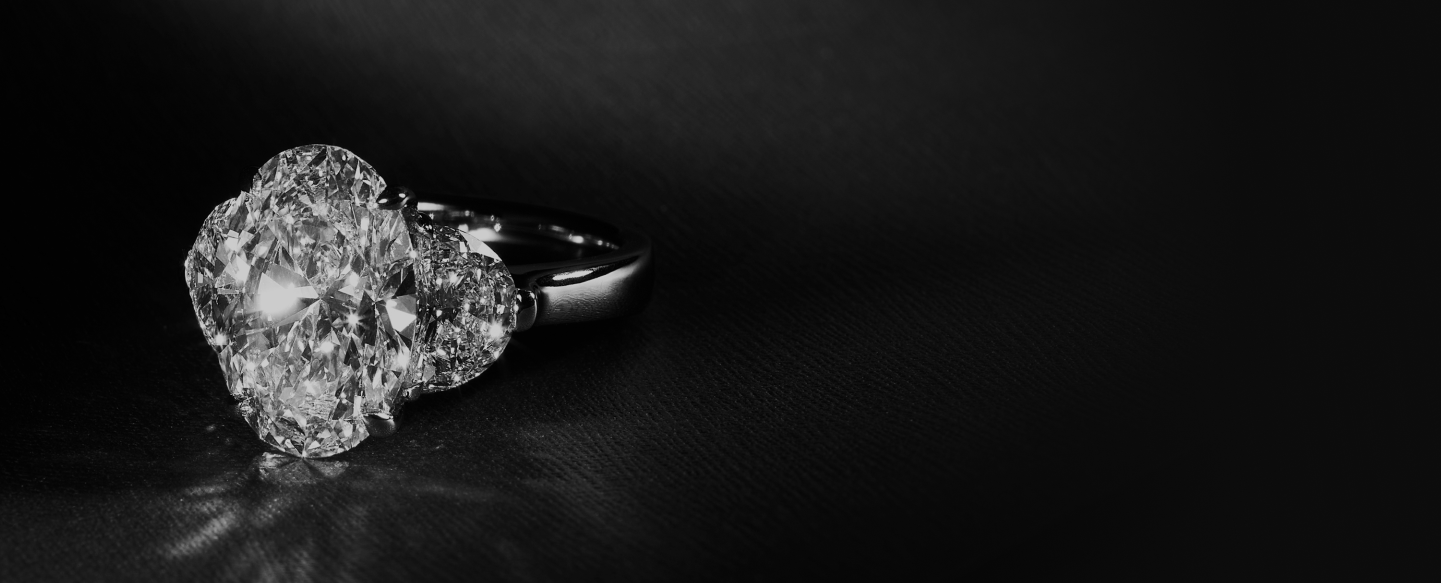
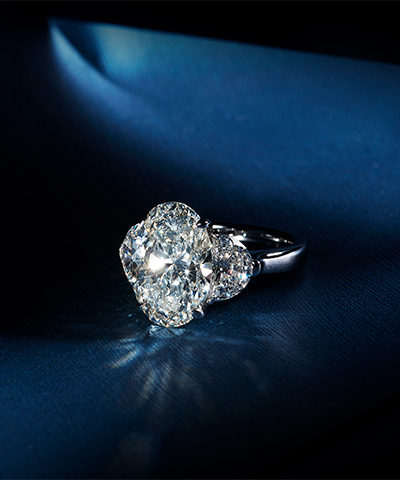
At ANANTA, we often recommend premium size diamonds: such as 0.90 ct, 1.90 ct, or 2.80 ct to deliver the same visual brilliance as milestone sizes, but with greater value and flexibility. These diamonds avoid inflated “magic size” pricing while still looking impressive when worn.
Why We Avoid Exact 1.00 or 2.00 Carat Diamonds
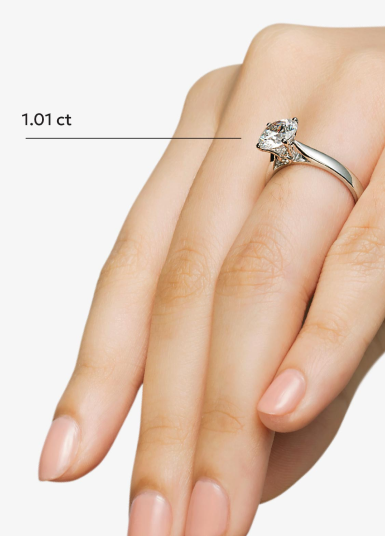
While these popular benchmarks may seem appealing, they come with hidden risks. Even a minor polishing or wear-related weight loss can drop a 1.00 ct diamond to 0.99 ct, significantly decreasing its value ; even if its appearance remains unchanged.
For this reason, ANANTA does not recommend or sell diamonds at exact 1.00 or 2.00 carats.
Instead, we offer hand-selected alternatives just above or below these points, protecting both your investment and peace of mind.
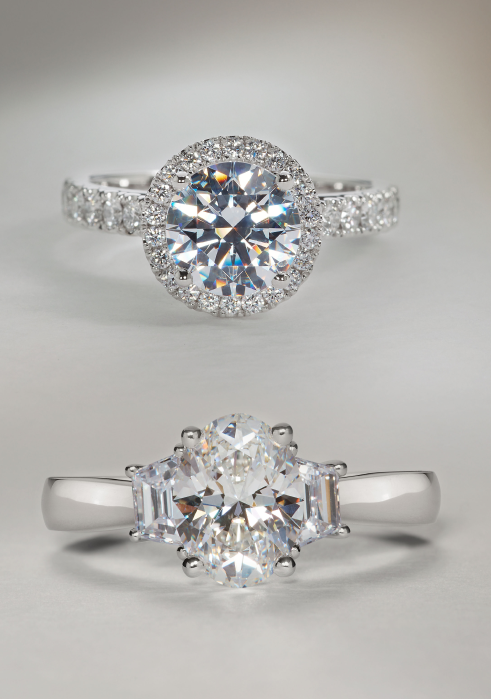
Tips to Maximize Carat Appearance
Looking for a larger visual presence without increasing carat weight? Consider:
- Halo settings: Surround your center diamond with a circle of smaller stones to enhance size and sparkle.
- Elongated shapes: Oval, emerald, or pear-shaped diamonds carry weight across the surface, maximizing visual size.
- Optimal cut: A well-cut diamond reflects light better and can appear larger than a poorly cut one of greater weight.

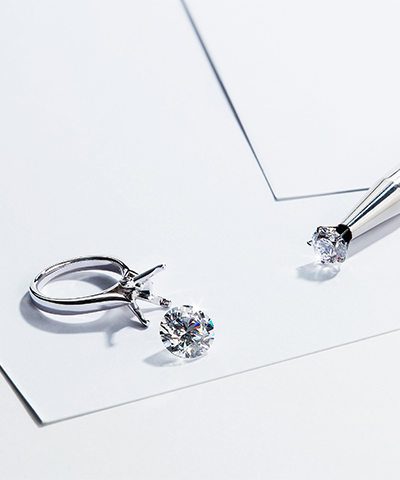
ANANTA’s Perspective
Carat weight is only part of the story. We believe true brilliance comes from how a diamond is cut, how it performs in light, and how it makes you feel.
That’s why every ANANTA diamond is chosen with care. Not just for carat, but for the harmony of beauty, proportion, and longevity.
Treasure your moment ; wisely, beautifully, brilliantly.

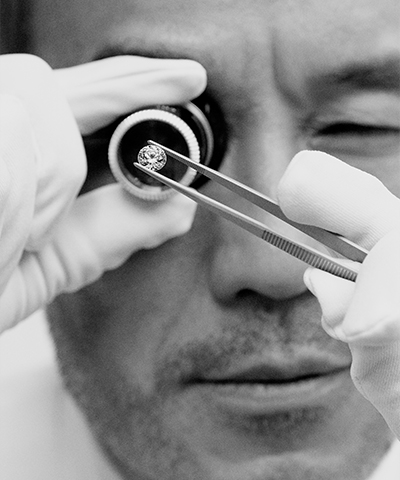
Written by ANANTA Expert: our team of specialists with decades of experience in fine jewelry and gemology.
Each contributor is a certified Gemologist from leading institutes, including GIA and GIT, combining academic rigor with hands-on expertise. Every article is crafted with accuracy, care, and passion, offering you trusted guidance to understand diamonds and jewelry more deeply. With ANANTA Expert, you can be confident that every insight reflects knowledge refined by both heritage and global standards.
Last updated: 5/12/2025